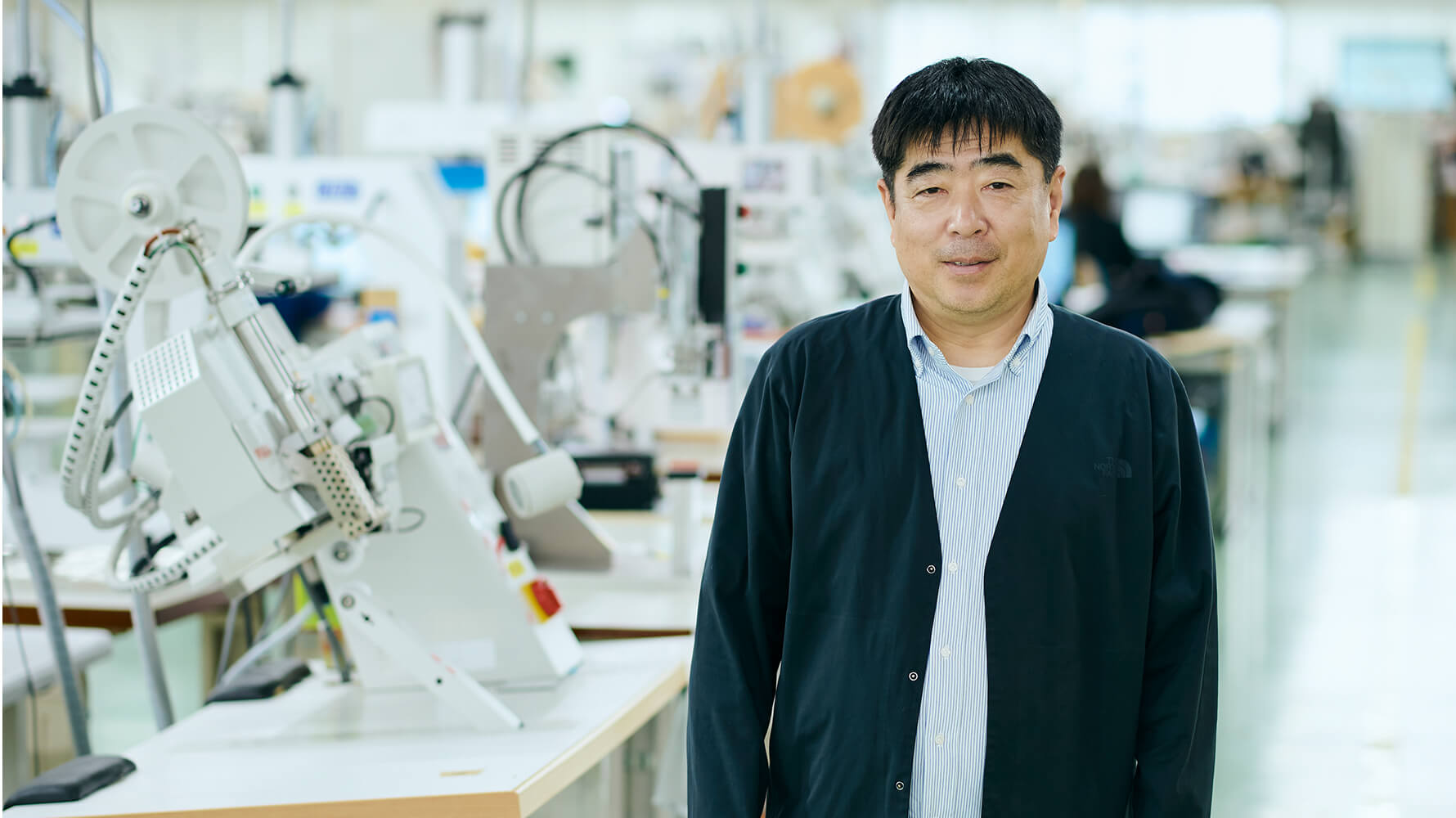
Our Toyama Head Office (Oyabe City, Toyama Prefecture) serves as a production technology hub. The technologies and improvements that have been built quietly and steadily at this office support our products, including those from Goldwin and THE NORTH FACE. Seiichi Miyashita, head of the Production Technology Department in the Research and Development Division, talks about daily monozukuri (the art of making things) activities at the Toyama Head Office that contribute to the success of top athletes, as well as his team’s pursuit of functional aesthetics and visual beauty for our products.
The Role of the Toyama Head Office as the Mother Factory
“I saw a shiny glass-walled building standing like a fortress among the rice fields,” says Miyashita with a nostalgic smile. Born and raised in Himi City, Toyama Prefecture, Miyashita went to college in Tokyo, but was determined to get a job back in Toyama. He vividly remembers his first impression of the Toyama Head Office in 1989, when he visited it during his job hunt.
“I was surprised to discover such an amazing company in Toyama.” (Miyashita)
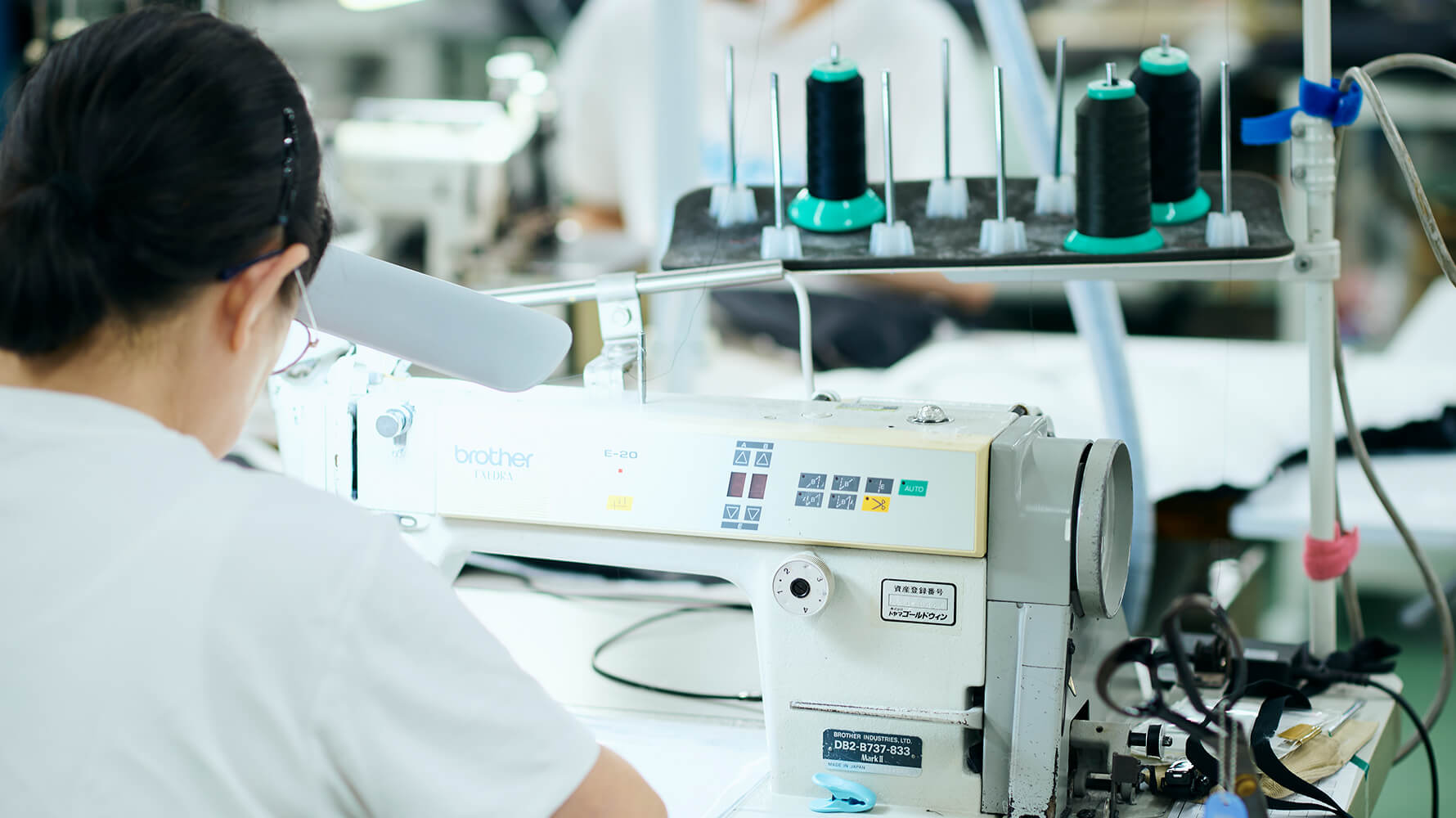
The Production Technology Department at the Toyama Head Office is not a mere prototyping factory. It produces both apparel requiring special technologies and mass-produced items using innovative technologies. These products include apparel featuring cutting-edge functions developed for top athletes by the Goldwin Tech Lab, an R&D center on the same premises. The department also trains staff at domestic and international factories in sewing techniques and production know-how, helping them solve production issues and improve efficiency. In other words, as the Mother Factory, the department prepares production processes so that overseas factories can mass-produce the products.
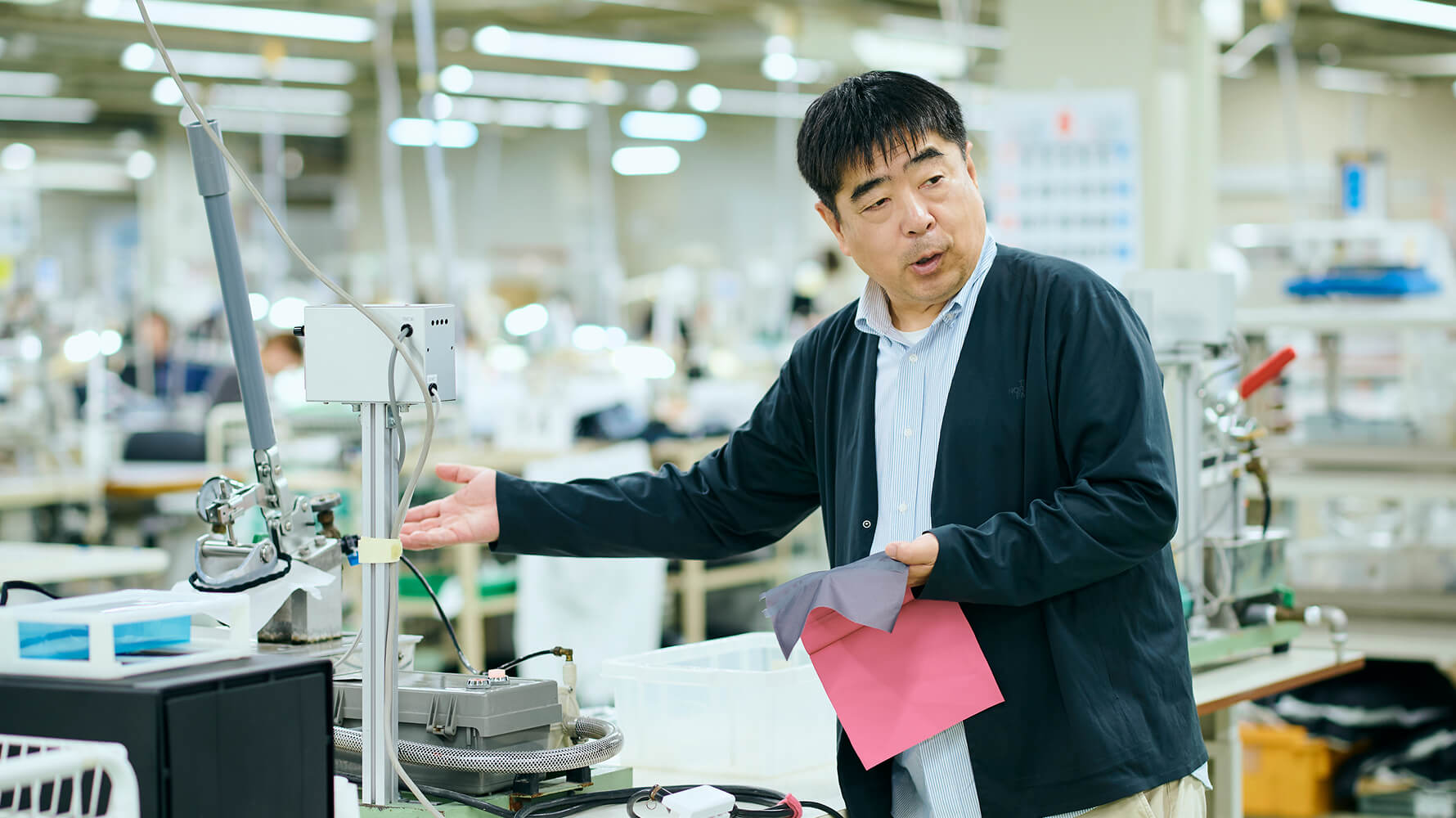
“The Toyama Head Office’s production share is actually very small—less than 1% of the total. Our job is to develop techniques for precisely sewing high-value products. We first create the finest products at the Toyama Head Office, and then properly train staff at overseas factories to mass produce them with the same level of quality.” (Miyashita)
Valuable Product Improvement Data Obtained from Repair Requests
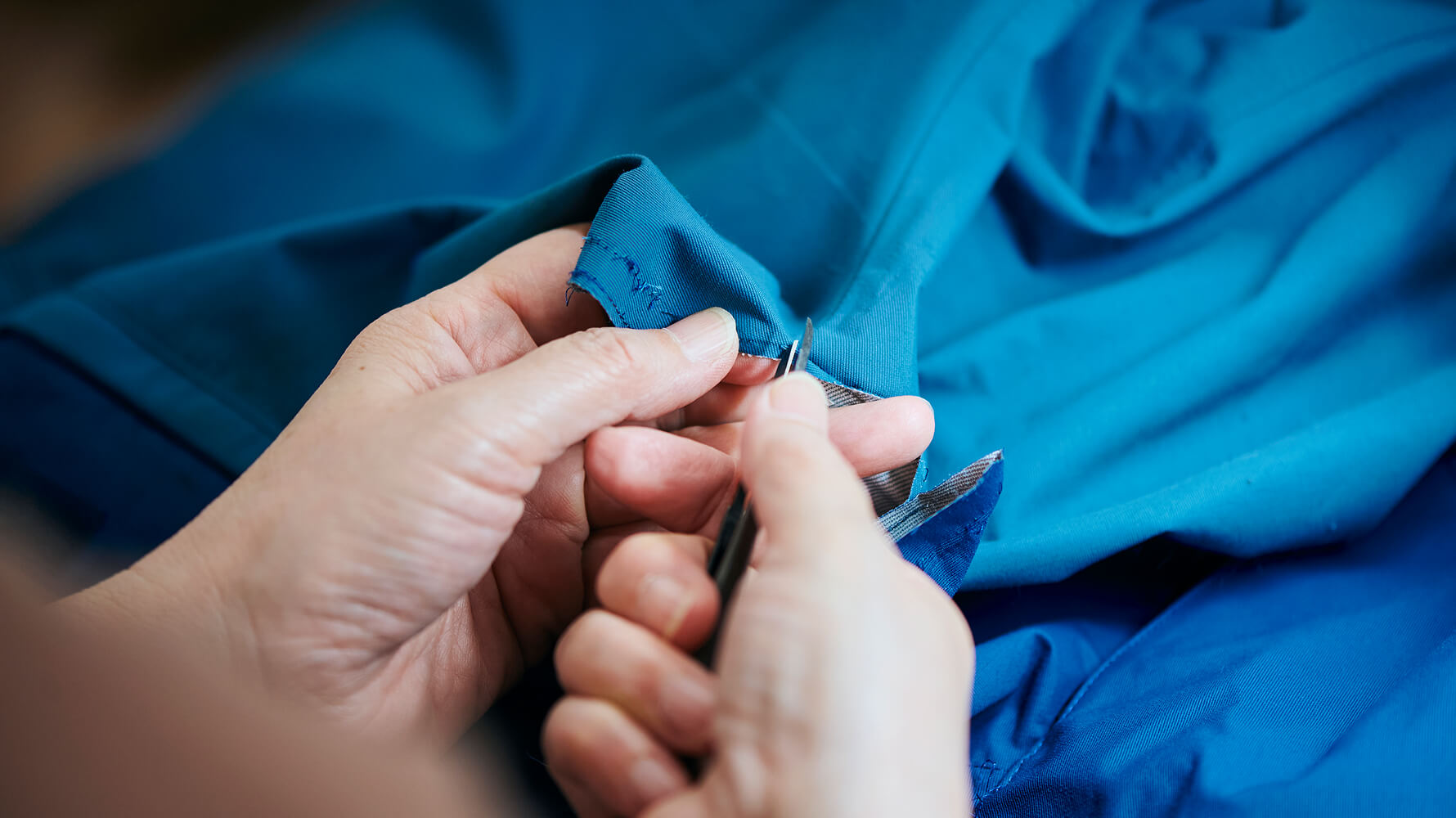
The Production Technology Department also has a dedicated team that handles repair services that have been running since the 1990s. Every year, we receive about 20,000 repair requests, which reflects how our products are being used in the real world. In June 2025, we launched a cleaning and storage service, where we repair clothes, tents, and sleeping bags, then have them professionally cleaned, and store them under optimal temperature and humidity levels until the next season.
“Our repair service is not only about fixing products; it also helps improve future products. Let’s say our repair center receives a buckle broken from pressure. Of course, we make sure that the buckles we use for our products meet our strength standards, but they may still break in unexpected ways. If we repeatedly receive repair requests for buckles on the same part of the same product, we raise the alarm and immediately gather our team to verify the issue. These findings are then applied to future product development, such as switching to stronger materials or making other necessary changes.” (Miyashita)
They use repair data to inform future product development, building a system to continually improve product durability and comfort through trial and error.
From Rapid Prototyping to Mass Production Through Iterative Collaboration with R&D
The Toyama Head Office houses various functions ranging from R&D to design, production, procurement, and quality assurance. This allows them to quickly share newly created items with the relevant team members, which Miyashita considers a major advantage. As soon as they receive a development request, the Production Technology Department quickly makes a prototype. They then conduct endurance and fit testing and provide feedback to relevant departments, including design, procurement, and the Tech Lab. Through repeated iterations of this cycle, the prototype gradually evolves into the finished product.
“In most cases, product development is not a simple, straightforward process. Relevant departments work closely to achieve their goal by iterating between prototyping and verification. If R&D, design, and production functions are far apart, it naturally takes a lot of time to verify and fix issues. But in our case, we can instantly gather to exchange views and make improvements. This makes a huge difference in how fast we can improve through trial and error.” (Miyashita)

Their ultimate goal is to deliver more beautiful and functional products to the market. Even if the departments disagree during the process, they can continue working together without conflict because they know they are working toward the same goal. Technologies developed through prototyping and refinement at the Toyama Head Office are applied to mass production at overseas factories.
“The Production Technology Department has staff responsible for technical verification for each brand. First, they master new techniques themselves so they can train others effectively. Then, they travel to overseas factories to train the local staff. At the same time, we make sure to share techniques across brands to avoid relying on particular individuals. By cooperating across brands, we ensure that techniques are easily reproducible and that our target quality standards are met across all factories.” (Miyashita)
When Miyashita worked in Tokyo from 1997 to 2000, he heard directly from sales teams and store staff.
“We know it’s important to meet deadlines, but I rarely feel that urgency firsthand working at the Toyama Head Office. When I was in Tokyo, we once missed a delivery deadline, and I saw the shelves originally reserved for our products filled with those of other companies. This experience made me realize how crucial it is to deliver products on time. Since then, I’ve been focusing on improving our quality standards, reducing costs, and ensuring on-time delivery. Now, I’m drawing on that experience to build a system for the Production Technology Department.” (Miyashita)
Elevating Technical Excellence by Integrating Fresh Talent
The Production Technology Department currently has about 150 members. While many of them are seasoned employees, the department has been actively hiring high school graduates for the past few years.
“We are working to elevate our technical capabilities by ensuring that everyone in the Production Technology Department becomes a professional. Traditionally, many of our techniques have been passed down through word of mouth, as in many Japanese production factories. However, we are considering implementing a video-based technical training system to systematize our training programs instead of relying on person-dependent succession. Once we establish training programs for each technique, team members can start at the appropriate level, whether they are new graduates or mid-career hires. We also encourage our staff to get national qualifications in sewing-related fields, such as manufacturing women’s and children’s clothing. By doing so, we are helping individual employees improve their skills.” (Miyashita)
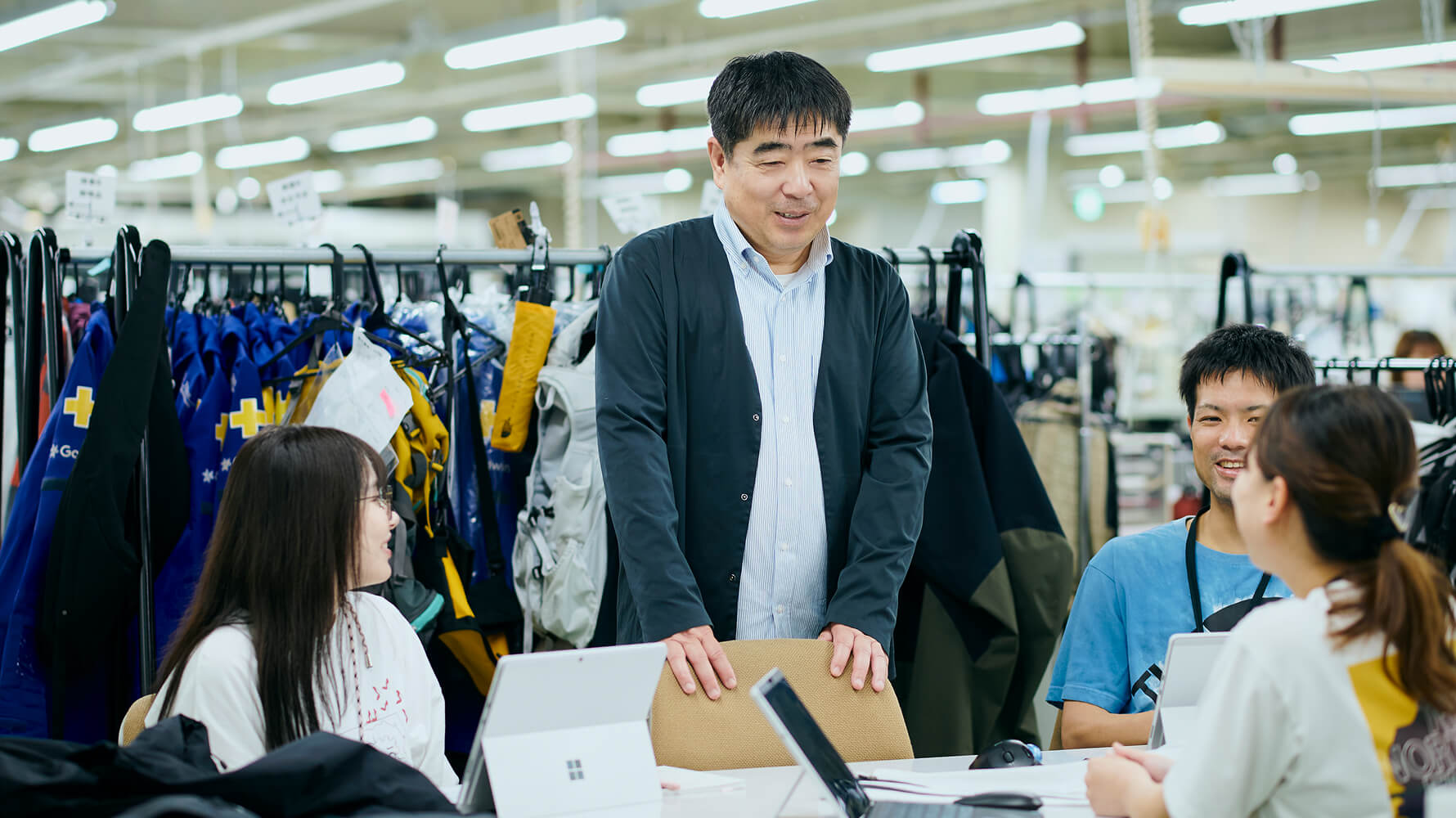
At the Toyama Head Office, the expertise of seasoned members merges with the energy of younger staff, creating a continuous cycle of tradition and innovation. Miyashita is determined to make the Toyama Head Office the world’s best production base.
“For example, we once struggled to create a beautiful curve for a rainwear hood. If you apply tape to the seams on the hood, it inevitably creates an uneven surface. It was a tough problem. To solve it, the team had multiple discussions and learned methods and techniques for creating curves. Through trial and error, we applied these findings and were able to make the hood’s curve much more beautiful.
“In addition to techniques, I want each member to have the motivation and pride to create better products. They may see top athletes competing in our products or notice our products at stores. My job is to cultivate people who take pride in knowing that their contributions helped make these products.” (Miyashita)
Each member of the Production Technology Department continues to work hard and make small improvements, contributing to the reliability and beauty of our products.
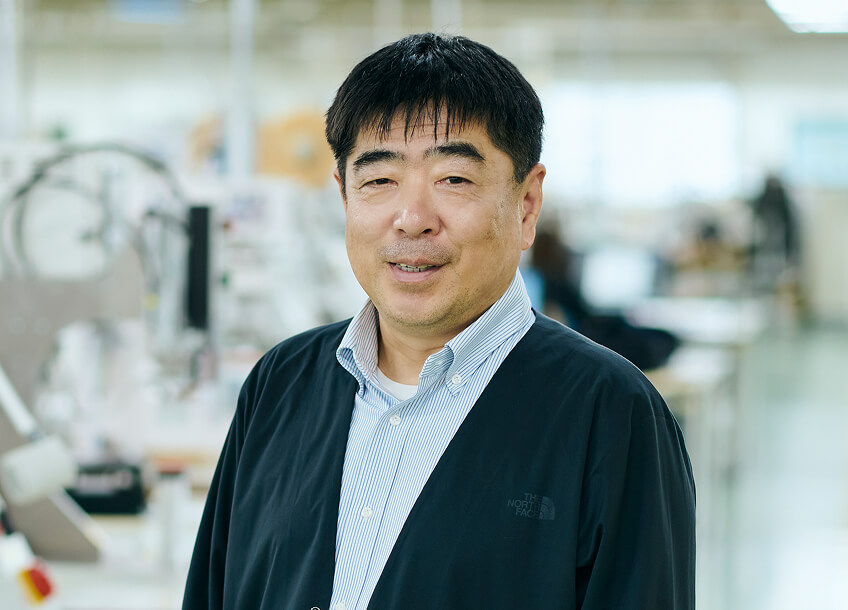
Seiichi Miyashita
Head of the Production Technology Department, Research and Development Division
Born in Himi City, Toyama Prefecture, 1967. Joined Toyama Goldwin in 1990, handling material procurement for outdoor brands. Seconded to Goldwin in 1997, he returned to the Toyama Head Office in 2000. Appointed as Manager of the Procurement Management Group, Procurement Management Department in 2003. In 2014, became Manager of the Business Promotion Office, Goldwin Technical Center. Following the company’s merger with Goldwin in 2020, he was appointed head of the Product Department, Product Division. In 2023, he was appointed head of the Production Technology Department, Product Division, which was renamed the Research and Development Division in 2024, and he has continued in this role. He finds peace in viewing the Tateyama Mountain Range from the seaside. Skilled at ball sports, he played baseball in elementary school, volleyball in junior high school and high school, and tennis in college.
The information provided, job titles and affiliations are current as of the time of the interview.
This serial Project is intended to help shareholders and investors understand our management policies, plans, financial situation, etc., and is not intended to solicit investment.